 Tap Baby Care

3 Weeks · 10 min read
All about your 3 week old
The first growth spurt often lands now, bringing cluster feeds, extra fuss, and a baby who is suddenly hungrier.
Read the guideOne month is a quiet turning of the page. Your baby is still a newborn by every medical definition, but the fog often lifts a little: longer gazes, slightly longer wake windows, and feeding that may feel less frantic than week one. The 1-month well visit is a good checkpoint for weight, feeding, and the questions you have been saving. You do not need a perfect schedule yet — you need a rhythm you can recognize.
Jump to a section
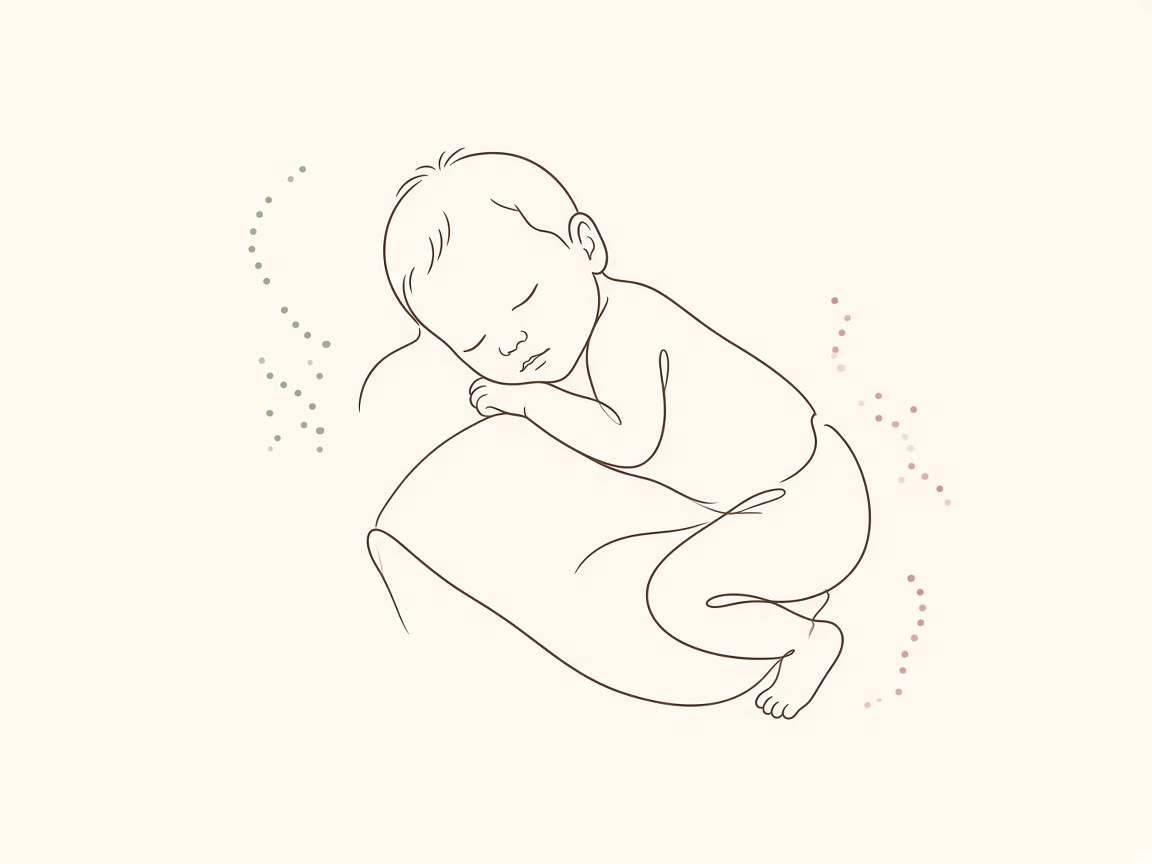
Around one month, many babies still sleep about 14–16 hours in 24 hours, with wake windows stretching toward 50–80 minutes. A few can handle closer to 90 minutes in the morning, then need shorter windows by late day. Nights remain fragmented. One 4-hour stretch can appear, then disappear after a growth burst or a missed nap.
You may start to see a very loose day shape: feed, a little social time, nap, repeat, with 4–6 daytime sleeps of wildly mixed length. Catnaps of 20–40 minutes sit next to the occasional 2-hour gift. Both are normal. The goal is enough total sleep, not four identical naps. If your baby is falling asleep while eating every time, they may be going into the feed already tired — try starting the nap a few minutes earlier.
A simple dusk routine earns its keep now: lights down, feed, swaddle or sleep sack if you use one, down on the back. You are not sleep training. You are giving the circadian system a daily postcard. Morning light, even through a window, is the other half of that postcard.
A loose rhythm appears: eat, a little social time, sleep, repeat — with nights still in pieces.
These are guidelines. What's normal and healthy can vary.
A 1 month old often tracks a face or toy moving slowly from side to side and stares at you like you invented light. Hands open for brief moments. On the tummy, many can lift the head briefly and turn to clear the nose. Daily tummy time might add up toward 10–15 minutes total, broken into tiny sessions. Chest-to-chest still counts.
Sounds besides crying show up more: throaty gurgles, sighs, a first almost-coo. Your baby may quiet when you walk into the room. That is recognition. They are not bored, and they do not need a curriculum. Faces, your voice, a slow walk around the room, and supervised floor time are the whole enrichment plan.
The 1-month visit typically includes weight, length, head circumference, feeding review, and sometimes vaccines depending on your clinic's schedule. Ask about vitamin D, any lingering jaundice, and how night waking looks against the growth curve. Bring a log if you have one — it turns “I think they eat a lot?” into something useful.
Every baby develops on their own timeline. Use this as a gentle guide. Talk to your pediatrician if you're concerned.
Many 1 month olds take about 3–4 oz per feed, 7–10 times in 24 hours, still often every 2.5–3.5 hours. Breastfed babies may go a little longer between some daytime feeds and still cluster at night. Efficiency usually improves: a feed that took 40 minutes may take 15–25. That is skill, not always a supply drop. Wet diapers should remain frequent.
Growth is the judge. Most babies are well above birth weight by now and following a curve. Spit-up can still be generous. Painful, arching, inconsolable feeds are a different story and worth a clinical conversation. Reflux-like discomfort is common; true failure to thrive is not something to diagnose from a parenting forum.
You still do not need solid food, water, or juice. If you are pumping, this is a reasonable week to notice a more stable daily output. If you are combo feeding, keep at least some direct breastfeeding or pumping if your goal is to maintain supply — volume follows demand.
Download Tap Baby Care free on Google Play — one-tap logging for sleep, feeds and diapers, with AI nap windows when you need them most.
Common questions parents ask at the 1 month stage.
Many 1 month olds sleep about 14–16 hours across 24 hours, still in pieces. Wake windows of 50–80 minutes and 4–6 daytime naps are common. A single long night stretch is a bonus, not a requirement.
Bottle-fed babies often take about 3–4 oz, 7–10 times a day. Breastfed babies are measured more by diapers and weight than by ounces. Appetite varies by day, especially around growth spurts.
Alert windows should be getting a little longer, but falling asleep at the breast is still common. If your baby is very hard to wake for feeds, has poor output, or seems limp, call your pediatrician. If they are wired and crying at 70 minutes awake, they may simply be overtired.
Not now. At 1 month, babies still need night feeds and help settling. Focus on sleepy cues, a dark safe sleep space, and day/night differences. Formal sleep training is generally considered after 4 months, if a family chooses it at all.
3 Weeks · 10 min read
The first growth spurt often lands now, bringing cluster feeds, extra fuss, and a baby who is suddenly hungrier.
Read the guide5 Weeks · 10 min read
Wake windows stretch, evening fuss often builds, and the first real smiles are close enough to hope for.
Read the guideNext: All about your 5 week old — Wake windows stretch, evening fuss often builds, and the first real smiles are close enough to hope for.
Read the next guide