 Tap Baby Care
9 Months · 12 min read
All about your 9 month old
Feelings show up on their face, they get in and out of sitting on their own, and a 2-nap rhythm finally starts to feel predictable.
Read the guideTen months is a touring month. Many babies pull to stand and cruise the sofa, imitate your sounds, and treat every household object like a science experiment. Sleep can wobble when they stand in the crib and cannot get down. Two naps still hold the day. This guide covers cruising, curiosity, and how to keep nights from becoming standing practice.
Jump to a section
Two naps remain the right structure at ten months. Wake windows often stretch to 3–4 hours. Naps may each run 45–90 minutes, totaling about 2–3 hours of daytime sleep, with 10–12 hours at night and 12–14 hours across the whole day. Bedtime still fits most families between 7:00 and 8:00 p.m.
Cruising shows up in the crib. Your baby pulls to stand, cannot figure out sitting back down, and yells for a rescue. Daytime practice is the fix: lots of pulling up at the couch and, just as important, lots of practicing the sit-back-down. In the moment, you can help them sit once, then give them a minute to try. Going in ten times to lay them down can accidentally turn into a game.
Separation anxiety and a busy brain can still add night wakes. Keep the room dark, the routine short, and your response consistent. If early morning standing starts at 5:00 a.m., treat it as a night wake until your agreed morning time when you can. Shortening the morning nap slightly can help if the afternoon nap is now a protest.
A 2-nap cruising day with 3–4 hour windows. Build in floor time so the crib is not the only place they stand.
These are guidelines. What is normal and healthy can vary from baby to baby.
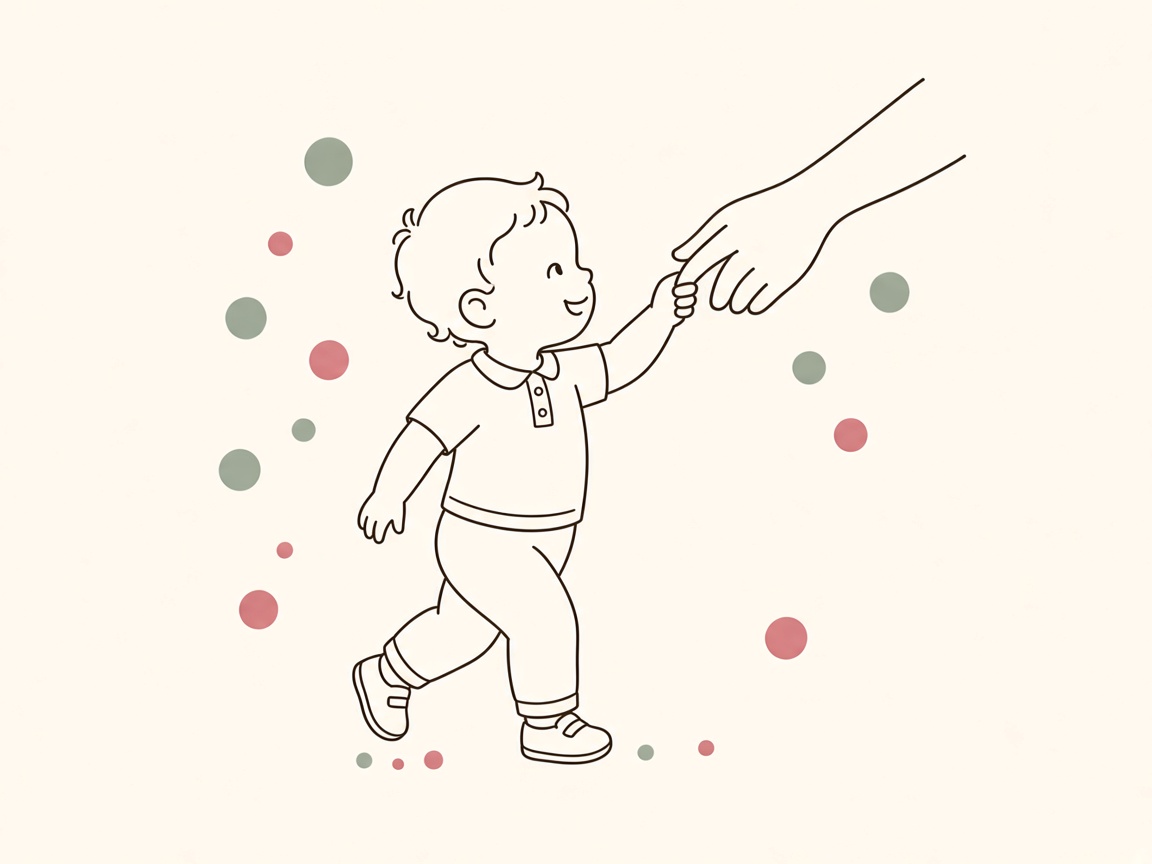
Cruising — stepping sideways while holding furniture — is the motor headline. It can start with pulling to stand, then a tentative sidestep along the couch. Some babies cruise for months before independent steps; some take a step in between and surprise you. Bare feet help them feel the floor. Push toys are optional; a low, sturdy coffee table they can cruise behind is enough.
Imitation is in full swing. They may copy a clap, a bang, a sound, or the way you wipe a table. Babble includes more consonants. They may say something that sounds like mama or dada, still not always aimed at a person. They drop toys on purpose to see what you do, empty a basket, and poke fingers into holes. That curiosity is intelligence, and it is also why cabinets need latches.
Socially, they have favorites: a person, a stuffed animal, a particular spoon. They may hand you a toy (and want it right back). Play is becoming two-way. Give them containers to fill and dump, board books they can turn, and time on the floor that is not a screen.
Every baby develops on their own timeline. Use this as a gentle guide. Talk to your pediatrician if you are concerned.
Food starts to share the stage more evenly with milk. Many 10-month-olds eat three meals and one or two small snacks, with milk around 16–24 ounces (or 3–4 breastfeeds). A pincer grasp — thumb and pointer — makes small pieces easier. Offer soft table foods cut safely: pasta, omelet strips, ripe fruit, cooked vegetables, flaked fish, ground meat, beans.
Follow their lead on amount. A high-energy cruising day may look hungrier; a teething day may look like a food strike. Keep milk as a complement, not a constant sip that crowds out meals. Water with meals stays modest. Cow's milk as a drink still waits until 12 months, though yogurt and cheese can already be regulars.
Sit together. They are watching how you eat as much as what is on their tray. If you are thinking about transitioning off formula in two months, this is a good time to practice an open or straw cup, not to switch the milk type yet.
Download Tap Baby Care free on Google Play — one-tap logging for sleep, feeds and diapers, with AI nap windows when you need them most.
Common questions parents ask at the 10 months stage.
Cruising often starts around 9–12 months, after pulling to stand. Some 10-month-olds are already touring the sofa; others are still crawling. Offer sturdy furniture, bare feet, and practice sitting back down. Independent walking can wait well into the next several months.
They have a new skill without a reliable off switch. Practice standing and sitting on the floor many times a day. At night, help them sit once, keep the room dark, and avoid turning it into a long visit. Most babies learn the down part within days to a couple of weeks of extra practice.
About 12–14 hours in 24 hours, with two naps totaling 2–3 hours and night sleep of 10–12 hours. Wake windows of 3–4 hours are typical. Stay on two naps; one nap is still early for most babies this age.
There is no separate biological sleep-cycle shift like at four months, but cruising, standing in the crib, and lingering separation anxiety can look like a regression. Hold the 2-nap day, practice motor skills before sleep, and keep night responses consistent. It usually eases as sitting down from stand gets easier.
9 Months · 12 min read
Feelings show up on their face, they get in and out of sitting on their own, and a 2-nap rhythm finally starts to feel predictable.
Read the guide11 Months · 12 min read
Simple instructions start to land, favorites get very specific, and nap resistance — especially that second nap — becomes a daily negotiation.
Read the guideNext: All about your 11 month old — Simple instructions start to land, favorites get very specific, and nap resistance — especially that second nap — becomes a daily negotiation.
Read the next guide