 Tap Baby Care
7 Weeks · 10 min read
All about your 7 week old
Daytime naps start clustering into a looser 4–5 nap shape, smiles get reliable, and day versus night finally begins to sort.
Read the guideTwo months is when a lot of parents meet the person their baby is becoming. Smiles are reliable, cooing is a hobby, and wake windows often stretch into the 75–105 minute range. The 2-month well visit — vaccines included — is a milestone for you as much as for them. Sleep is not “solved,” but it is usually more patterned than the fourth-trimester fog, and feeds are more efficient than they were at week two.
Jump to a section
At around 2 months, many babies sleep about 14–16 hours in 24 hours (some land closer to 12–15 if they are very alert). Wake windows often run 75–105 minutes. Four to five naps remain the usual daytime structure. Bedtime may start to creep earlier than the newborn 10 p.m. slump — some families find a sweet spot between 7:30 and 9:30 p.m., guided by sleepy cues, not a rule.
Night sleep can include a 5–6 hour stretch for some babies, still typically broken by feeds. This is consolidation beginning, not sleeping through. If vaccines land this week, expect a 24–48 hour blip: extra sleep, extra fuss, or extra feeds. Offer comfort and calories; do not overhaul the “schedule” because of one feverish night.
Catnaps of 30–45 minutes are still developmentally honest. You can try a brief pause before picking up from a short nap to see if they link a cycle, but at 2 months most will need help. Formal extinction methods are still too early. Safe sleep is unchanged, and the swaddle should go as soon as rolling starts — a few 2 month olds are practicing the roll from tummy to back.
Days look more social; nights often include one longer stretch and a couple of feeds.
These are guidelines. What's normal and healthy can vary.
CDC-aligned 2-month skills include calming when spoken to or picked up, looking at your face, seeming happy to see you, smiling when you smile, making sounds other than crying, reacting to loud sounds, watching you move, looking at a toy for several seconds, holding the head up in tummy time, moving both arms and legs, and opening hands briefly. Your baby may do more than this list. They may do it a week later. The visit is where concerns get a professional look.
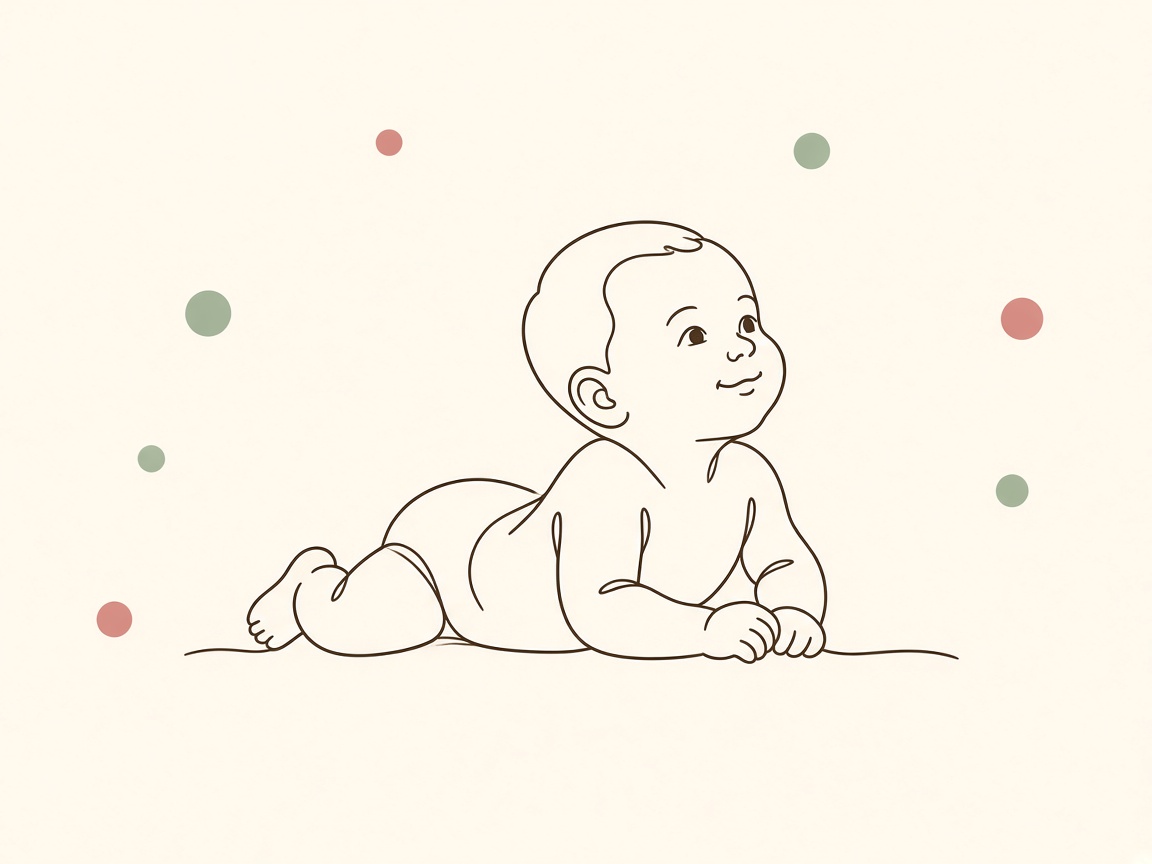
Tummy time of 20–30 minutes a day, split up, supports the head-lift. Many 2 month olds hold 45 degrees and start to push the chest a little higher. Tracking can approach 180 degrees. Hands are open more than fisted. A play gym is finally interesting for a few minutes at a time.
Talk in a singsong voice, pause, and wait. That wait is how turn-taking is born. Limit background TV during social windows so your face stays the main show. Development at 2 months is relationship, not flashcards.
Every baby develops on their own timeline. Use this as a gentle guide. Talk to your pediatrician if you're concerned.
Many 2 month olds take about 4–6 oz, 6–8 times in 24 hours, with 3–4 hours between some daytime feeds. Breastfed babies may still nurse 7–8 times, including nights. Growth remains the scoreboard. The 2-month visit plots weight, length, and head size; bring your typical day’s ounces or nurse count.
Night feeds often number 2–3. Dropping them to chase a full night is not the assignment. Some babies naturally stretch one interval after a bigger evening feed; others still snack. Both are allowed. If you pump, a more predictable 2-month output is common as supply regulates from “newborn plenty” toward a steadier baseline.
Spit-up may continue. True reflux that hurts, or blood in spit-up or stool, needs a clinician. No solids, no water as a drink. If you are returning to work soon, start one practice bottle with a caregiver now, while you are still home to troubleshoot, rather than on the first day of the commute.
Download Tap Baby Care free on Google Play — one-tap logging for sleep, feeds and diapers, with AI nap windows when you need them most.
Common questions parents ask at the 2 months stage.
Many sleep about 14–16 hours across 24 hours, with wake windows of 75–105 minutes and 4–5 naps. Some very social babies sleep a little less and still thrive. Night feeds are still normal.
Usually around 6–8 weeks, so by 2 months genuine social smiling is expected for most babies. Mention it at the well visit if smiles, eye contact, or response to sound are missing.
The next day or two can be extra sleepy, extra fussy, or extra hungry. Comfort, feeds, and your clinician's fever guidance are the plan. Sleep patterns typically return once they feel better.
A 5–6 hour stretch happens for some; 8+ hours without a feed is not a goal and may not be appropriate depending on weight and feeding history. Ask your pediatrician before you stop offering night calories.
7 Weeks · 10 min read
Daytime naps start clustering into a looser 4–5 nap shape, smiles get reliable, and day versus night finally begins to sort.
Read the guide9 Weeks · 10 min read
Wake windows lengthen, a longer night stretch becomes more plausible, and your 9 week old is becoming a real conversationalist.
Read the guideNext: All about your 9 week old — Wake windows lengthen, a longer night stretch becomes more plausible, and your 9 week old is becoming a real conversationalist.
Read the next guide