 Tap Baby Care
5 Weeks · 10 min read
All about your 5 week old
Wake windows stretch, evening fuss often builds, and the first real smiles are close enough to hope for.
Read the guideSix weeks is a headline week: many babies offer their first true social smile, and many families meet the witching hour in full. Add a common growth spurt and you get a baby who is more delightful at 10 a.m. and more intense at 6 p.m. Both are real. This is peak crying for a lot of infants, and it is also the week a lot of parents say, “Oh — there you are.”
Jump to a section
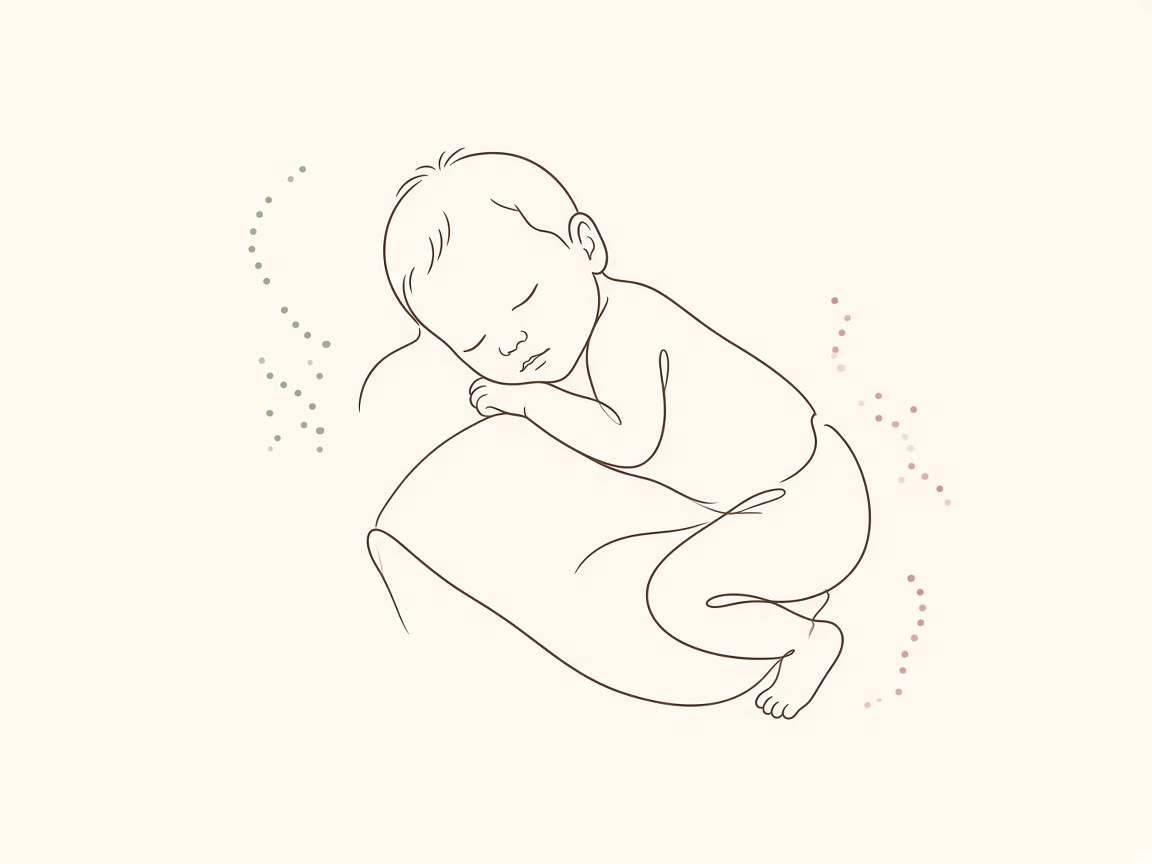
Sleep totals are still about 14–16 hours, with wake windows around 60–90 minutes. The new plot is the witching hour: a fussy, squirmy, hard-to-feed stretch that often lands between 5 and 9 p.m. It is usually stacked overtiredness plus a more socially awake baby, not a mysterious allergy (though true medical issues deserve a check if something feels wrong).
Survival tactics are dull and effective. Shorten late-day wake windows. Feed on demand, even if the last feed was recent. Lower lights, add white noise, wear the baby if that helps, and drop the idea of an “independent” bedtime. Contact naps in the afternoon can take the edge off the evening. This phase typically eases as circadian rhythm matures over the next 2–6 weeks.
Nights may fragment again during the 6-week growth spurt. Offer calories first. Keep the sleep space safe and boring. If you have been using a swaddle and your baby is still not rolling, it can still be a tool — hips loose, always on the back, discontinued at the first roll signs.
Days can look sweet; late afternoon often asks for extra feeds and a dimmer switch.
These are guidelines. What's normal and healthy can vary.
If you have been waiting for a real smile, this is a classic week for it. A social smile happens when your baby is awake, looking at you, and grinning because you exist — not because gas is moving. Cooing often tags along: open vowel sounds that invite you to answer. That back-and-forth is early conversation.
Head control in tummy time is stronger. Many 6 week olds lift to 45 degrees and hold it a beat longer. Daily tummy time might total 20–30 minutes in pieces. Hands open more of the day. Your baby may watch a toy you move in an arc, though batting at it is still clumsy and optional.
The 6-week growth spurt can make them needier just as they become more fun. That is a frustrating combo. Protect sleep and feeds, then use the best morning window for smiles and floor time. You will get more of the baby you like when they are not running on fumes.
Every baby develops on their own timeline. Use this as a gentle guide. Talk to your pediatrician if you're concerned.
A 6-week growth spurt is common. Daytime bottles may sit around 3.5–4.5 oz, 7–9 feeds a day, then evenings turn into a buffet. Breastfed babies may want the breast hourly after 4 p.m. for a few days. Follow it. Supply and appetite usually restabilize. Stretching feeds through a spurt just adds crying.
During the witching hour, some babies fuss at the breast or bottle, pull off, then root again. Try a calmer room, a paced bottle, or a switch to motion after a decent intake. Gas is often blamed; tiredness is the more frequent culprit. If there is blood in stool, poor weight gain, or a baby in obvious pain, that is a clinical visit, not a wait-it-out night.
If you are pumping, this week can look like a sudden “I need more milk” from the baby without a matching freezer crisis. Extra nursing or an added pump for a few days often closes the gap. Solids are still months away. Vitamin D remains a pediatric conversation for breastfed babies.
Download Tap Baby Care free on Google Play — one-tap logging for sleep, feeds and diapers, with AI nap windows when you need them most.
Common questions parents ask at the 6 weeks stage.
A fussy period, often 5–9 p.m., that commonly shows up around 6 weeks. Babies may cry, cluster feed, and refuse sleep even when they are tired. It usually eases as nights organize over the next several weeks. Feed, dim, hold, and skip sleep-training experiments.
Many babies do eat more often around 6 weeks for a few days. Watch diapers and mood after the surge. If extra feeding lasts and weight is a concern, check in with your pediatrician or a lactation professional rather than assuming it is “just a spurt” forever.
Typically 6–8 weeks. A social smile is awake, responsive, and aimed at a face. If there is no social smile by about 8–10 weeks, mention it at a visit — early is not always late, but it is worth tracking.
Lower the bar: feeds, darkness, motion, and a partner swap. Put the baby in a safe bassinet and step outside if you are at your limit. Peak crying is developmental. If you ever feel you might shake the baby, put them down and get help immediately.
5 Weeks · 10 min read
Wake windows stretch, evening fuss often builds, and the first real smiles are close enough to hope for.
Read the guide7 Weeks · 10 min read
Daytime naps start clustering into a looser 4–5 nap shape, smiles get reliable, and day versus night finally begins to sort.
Read the guideNext: All about your 7 week old — Daytime naps start clustering into a looser 4–5 nap shape, smiles get reliable, and day versus night finally begins to sort.
Read the next guide