 Tap Baby Care
6 Months · 13 min read
All about your 6 month old
Solids join the table, sitting with support gets stronger, and rolling both ways makes the floor the most interesting room in the house.
Read the guideSeven months is a logistics month. Three naps stop fitting, two naps are not quite fluent yet, and your baby may sit up on their own and start pivoting toward a crawl. Solids move toward two or three sittings while milk is still the nutritional anchor. This guide is for the in-between days — the ones that feel one nap too many and one nap too few.
Jump to a section
The 3-to-2 nap transition is the sleep story of seven months. It starts when the third nap becomes a daily fight, bedtime drifts later than 8:00 p.m., morning wakes creep earlier, or wake windows naturally stretch past 2.5 hours. You do not flip a switch. For one to three weeks, some days will hold three naps and some will hold two, with an earlier bedtime (often 6:30–7:00 p.m.) doing the repair work on 2-nap days.
On a two-nap day, wake windows typically land around 2.5–3.25 hours, with the longest stretch before bed. Naps often aim for about 1–1.5 hours each, totaling 2.5–3.5 hours of daytime sleep. Night sleep is still about 10–12 hours. Total sleep across 24 hours commonly sits at 12–15 hours. If the morning nap is a two-hour marathon, the afternoon nap will suffer — cap the first nap around 75–90 minutes while the transition is fresh.
A 15–20 minute bridge catnap around 4:30 or 5:00 p.m. is allowed on the hardest days, followed by an early bedtime. That is not failure; it is how sleep pressure stays humane while the new rhythm settles. Keep the bedtime routine identical whether it is a two-nap or three-nap day. Consistency in the wind-down matters more than a perfect clock.
Separation protest at bedtime can show up now too. Sitting independently and moving more makes the crib feel like a plot twist. Stay calm, keep lights low, and avoid turning bedtime into a long play session. This stretch is messy and temporary.
A 2-nap day during the 3-to-2 transition. If afternoon falls apart, add a 15-minute catnap and pull bedtime earlier.
These are guidelines. What is normal and healthy can vary from baby to baby.
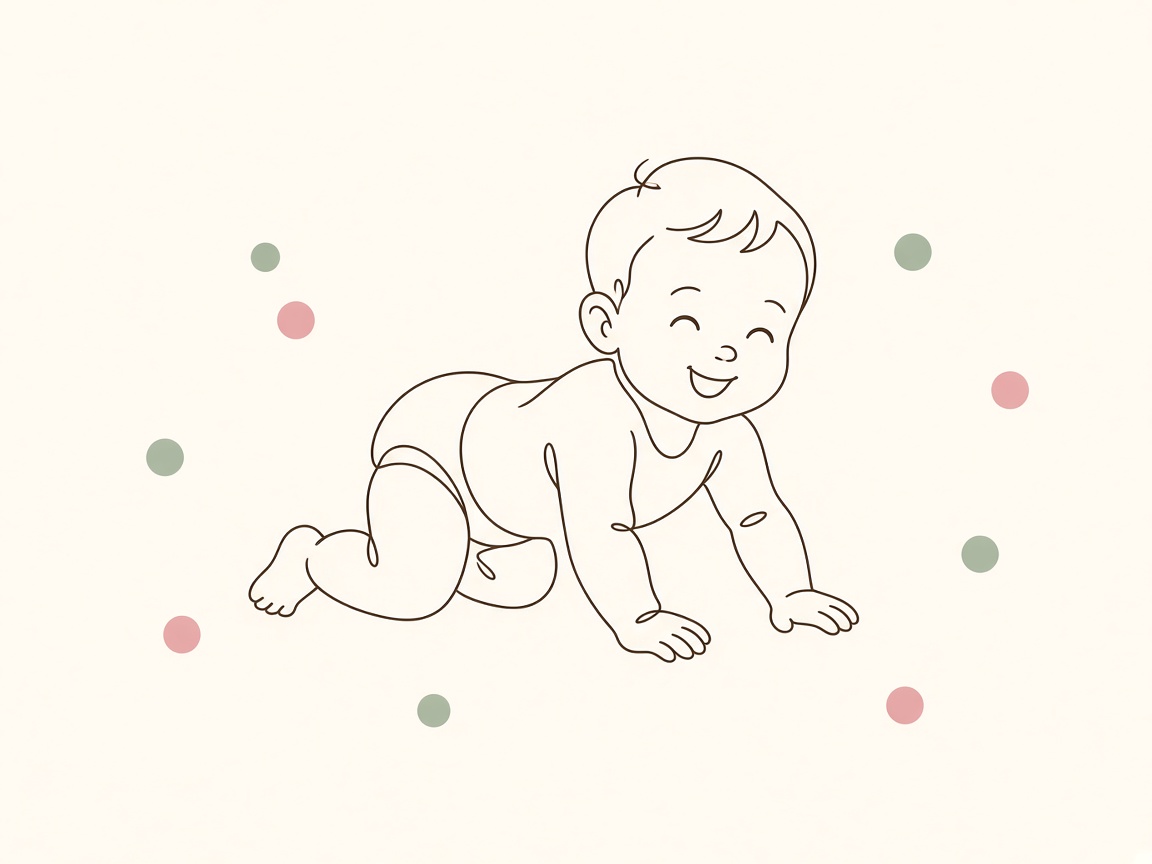
Independent sitting often clicks at seven months. Your baby may get into a sit from the side, stay balanced without a tripod, and start pivoting to reach a toy. From there, scooting, lunging, or an army crawl (belly on the floor) is a common next step. Classic hands-and-knees crawling can wait until 8–10 months. All of those versions count as mobility.
Hands get more precise. A raking grasp (sweeping food or toys with the fingers) is typical; a true pincer is just beginning for some. Your baby may bang objects, transfer from hand to hand, and inspect everything with mouth and eyes. Language is still babble, but you may hear repeated syllables and a clearer reaction to their name.
Stranger wariness can start here, even with grandparents they used to greet with glee. That is attachment, not a personality problem. Give warm-up time, let your baby watch from your lap, and do not force a hold. Floor play, a low table to pat, and plenty of supervised exploring will do more for crawling than a walker, which is best skipped for safety.
Every baby develops on their own timeline. Use this as a gentle guide. Talk to your pediatrician if you are concerned.
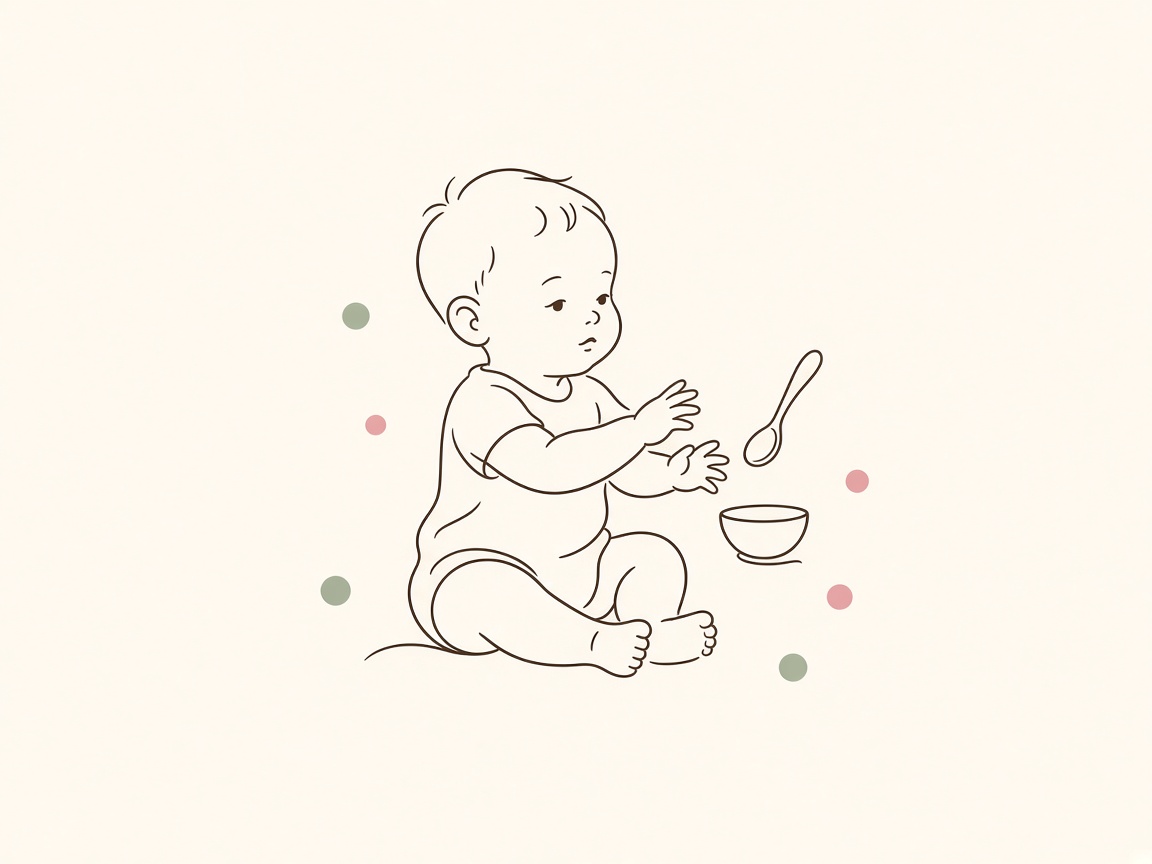
Solids expand to two, then three sittings while milk remains the nutritional lead. Many babies still take 24–30 ounces of breast milk or formula, or about 4–6 milk feeds. Meals can look like mashed or finely chopped foods: soft fruit, cooked vegetables, flaked fish, ground or shredded meat, lentils, yogurt if dairy has been introduced, and iron-fortified grains. Offer water in a small open or straw cup with meals.
Let your baby explore. A mess is motor practice. Put a few pieces on the tray and keep serving family flavors (without added salt, honey, or choking hazards like whole grapes or nuts). If they refuse a food, offer it again another day — it can take many exposures. Gagging on new textures is still common; stay seated with them and keep pieces soft and manageable.
Growth continues to show up in wet diapers and the weight curve, not in how many ounces of puree disappear. Some 7-month-olds are enthusiastic eaters; others take three bites and are done. Both can be well nourished if milk intake is solid. Keep milk feeds predictable so solids do not accidentally crowd them out this early.
Download Tap Baby Care free on Google Play — one-tap logging for sleep, feeds and diapers, with AI nap windows when you need them most.
Common questions parents ask at the 7 months stage.
Wait for consistent signs — a fought third nap, late bedtimes, or windows past 2.5 hours — then try 2-nap days with an earlier bedtime. Mix 2- and 3-nap days for a week or two rather than forcing a sudden switch. Cap the morning nap so the afternoon one still has room, and use a tiny catnap plus 6:30 p.m. bed when everyone is frayed. The new rhythm usually settles in one to three weeks.
Crawling often appears between 7 and 10 months, and the style varies: scoot, army crawl, classic hands-and-knees, or even a roll-to-get-there method. Some babies skip crawling and go toward pulling up. Floor time matters more than the exact style. Mention it at a well visit if your baby is not moving toward mobility by around 10 months or uses one side of the body very differently from the other.
About 12–15 hours in 24 hours, with night sleep of 10–12 hours and 2.5–3.5 hours of daytime sleep. During the 3-to-2 shift, two naps of roughly 75–90 minutes each are a solid target, with wake windows around 2.5–3.25 hours. Short-nap days deserve an earlier bedtime, not a later one.
Two to three solid sittings plus 4–6 milk feeds is a typical pattern. Milk still leads nutritionally (often 24–30 ounces). Keep servings small, iron-rich, and supervised. If solids start crowding out milk and wet diapers drop, scale meals back and talk with your pediatrician.
6 Months · 13 min read
Solids join the table, sitting with support gets stronger, and rolling both ways makes the floor the most interesting room in the house.
Read the guide8 Months · 12 min read
Crawling practice, a more solid 2-nap rhythm, and babble that starts to sound like a conversation you almost understand.
Read the guideNext: All about your 8 month old — Crawling practice, a more solid 2-nap rhythm, and babble that starts to sound like a conversation you almost understand.
Read the next guide