Why track your baby's sleep at all?
Sleep is one of the first things new parents worry about — and one of the first things they cannot see clearly. A baby sleep tracker turns scattered guesses into logged facts, helping you spot patterns, sleepy cues and changes that follow illness, travel or schedule shifts.
What to log for a complete sleep picture
- Bedtime and the start of night sleep
- Night wakings and how long baby stayed awake
- Each nap: start time, end time and total minutes
- Sleepy cues you noticed before each sleep period
How much should a baby sleep?
General guidance puts newborns (0–3 months) at around 14–17 hours of sleep per day, and babies around 4–11 months closer to 12–14 hours, split across night and naps. These are broad ranges rather than medical advice — your pediatrician is the best judge of your own baby's needs.
Track it this way.
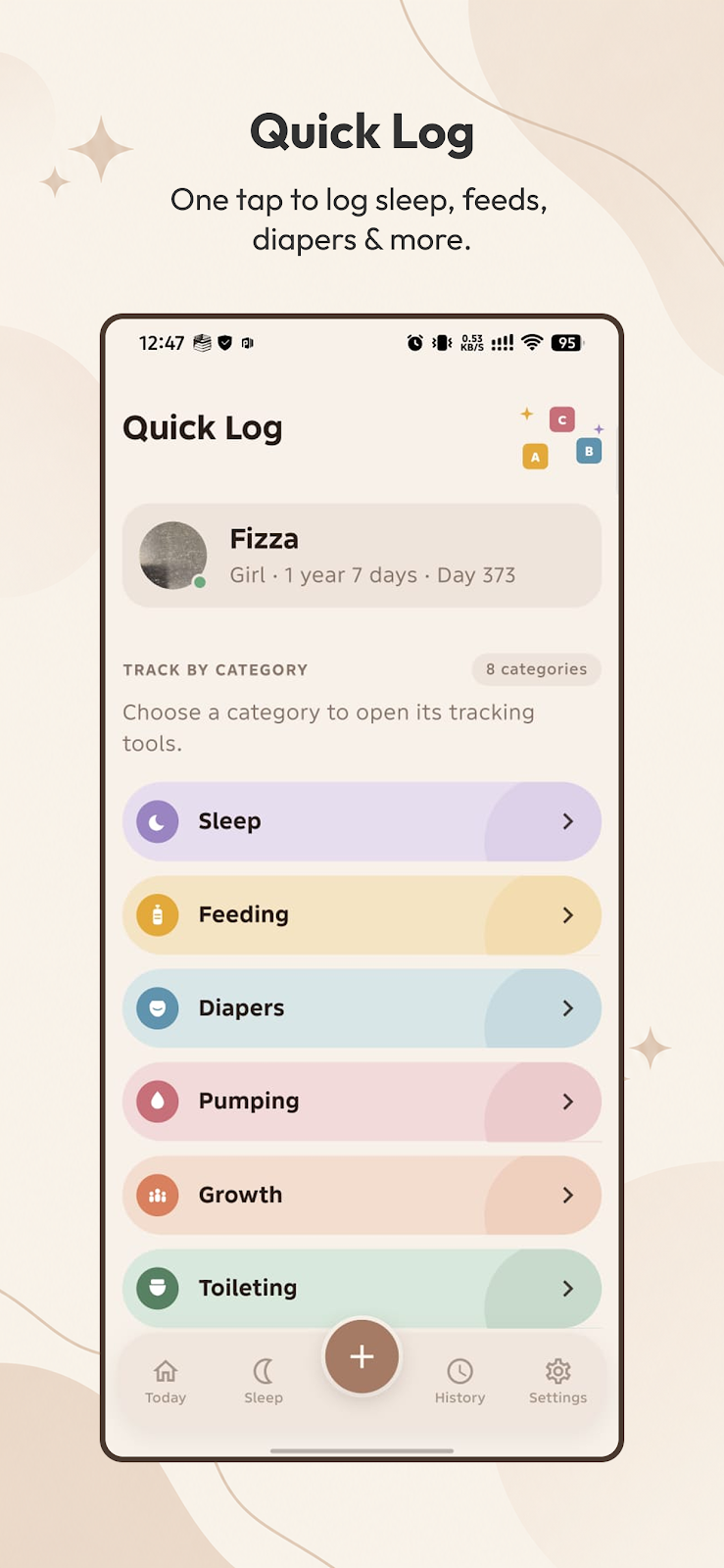
Download Tap Baby Care free on Google Play — one-tap logging for sleep, feeds and diapers, with AI nap windows when you need them most.
 Tap Baby Care