 Tap Baby Care
3 Months · 12 min read
All about your 3 month old
Rhythms get more predictable, hands become tools, and babbling starts — just as sleep cycles prepare for a big upgrade.
Read the guideFour months is often when days get more social — and nights get more confusing. Sleep cycles reorganize, first chuckles show up, and the much-talked-about 4-month sleep regression can turn a decent stretch of rest into a string of shorter ones. This guide covers what is changing in sleep, development, and feeding, with a sample day you can actually use.
Jump to a section
The 4-month sleep regression is less a step backward than a brain upgrade. Around this age, newborn-style sleep — lots of active, easy-to-re-enter rest — reorganizes into more adult-like cycles of roughly 90 minutes, with lighter stages between them. When a cycle ends, your baby may fully wake, notice the room, and need help linking the next one. That is why a baby who had been giving you a five- or six-hour stretch may suddenly wake every two hours, even if nothing else has changed.
Most 4-month-olds still take three or four naps and sleep about 12–16 hours across a full day, with 10–12 of those hours at night (often interrupted) and 3–5 hours in daytime sleep. Wake windows typically stretch to 1.5–2.5 hours, often landing near two hours by late in the month. Bedtime commonly settles between 7:00 and 8:00 p.m. The regression itself usually lasts two to six weeks; some babies breeze through, others need a more consistent wind-down before things even out.
What helps is not a perfect schedule overnight. Watch sleepy cues (glazed eyes, zoning out, fussing at the end of a window), protect a dark, boring sleep space, and keep the last hour of the day predictable — feed, dim lights, a short wind-down, into the crib drowsy. Continue placing your baby on their back to sleep. If they have started rolling onto their tummy and cannot yet roll back, talk with your pediatrician about how to keep nights safe while motor skills catch up. Short, frequent night wakes during this window are common and not a sign you have undone earlier progress.
A 3-nap day with an optional late catnap. Shift the whole rhythm to match your baby's morning wake.
These are guidelines. What is normal and healthy can vary from baby to baby.
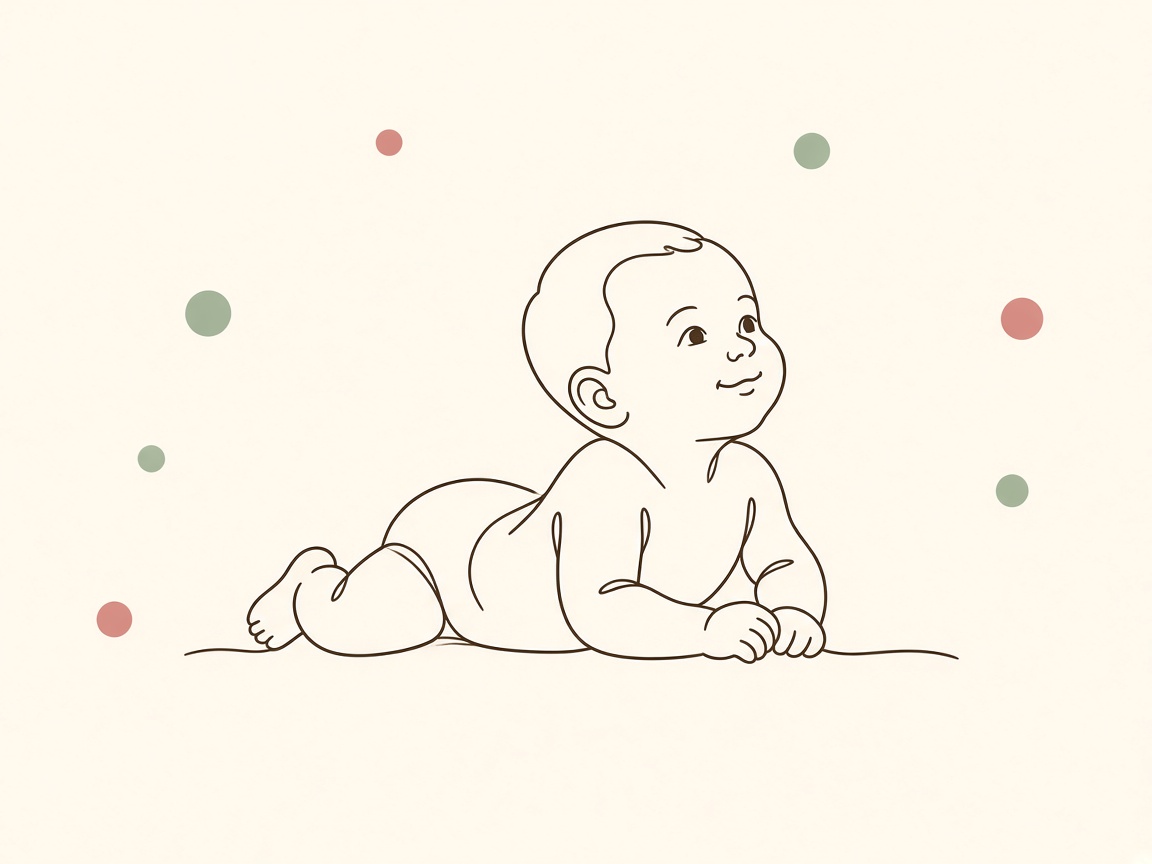
Four months is a social bloom. Many babies chuckle or laugh when you make a silly face, hold their head steadily, push up on elbows in tummy time, and start batting at toys. Hands become fascinating. Some begin rolling tummy to back — a milestone that can show up first on the play mat and then, inconveniently, in the crib.
Cognitively, your baby is tracking objects more smoothly, recognizing familiar people across a room, and experimenting with a wider range of coos. They may get quiet and focused when they hear your voice, or kick with excitement when they see a sibling. This is also when some parents notice a stronger preference for a primary caregiver, which can feel like a compliment and a logistical puzzle at once.
Keep play short and floor-based. A few minutes of tummy time several times a day still matters more than one long session. Narrate what you are doing, offer a rattle just within reach, and pause so your baby can answer with a sound. You do not need special equipment; your face is still the most interesting toy in the house.
Every baby develops on their own timeline. Use this as a gentle guide. Talk to your pediatrician if you are concerned.
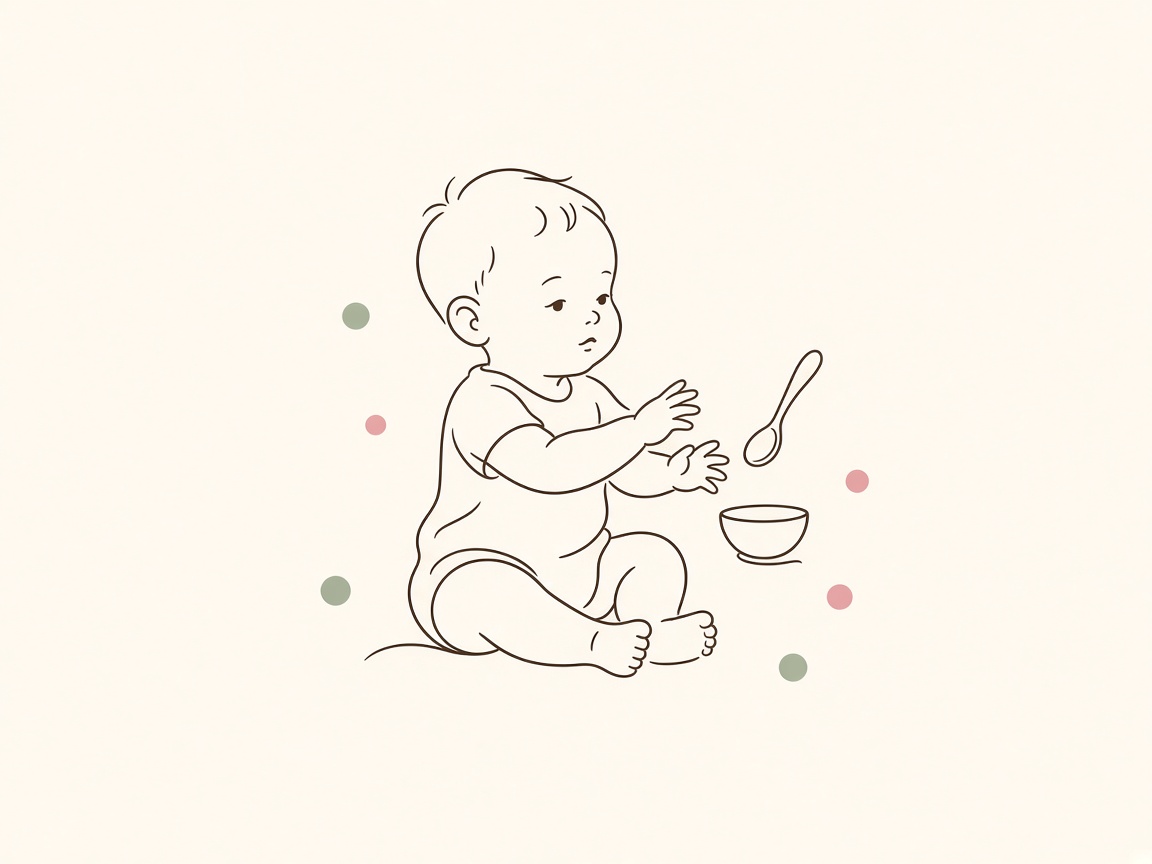
Milk is still the whole menu at four months. Breast milk or formula covers nutrition; the American Academy of Pediatrics generally recommends waiting until around six months to start solids, unless your pediatrician has advised otherwise. Most babies take 5–8 milk feeds in 24 hours. Bottle-fed babies often drink 4–6 ounces per feed, totaling roughly 24–32 ounces a day. Breastfed babies usually nurse 6–8 times, sometimes more during growth spurts or the sleep regression.
Night feeds are still normal. Some 4-month-olds can go a longer stretch at the start of the night; many still wake to eat once or twice, or more while sleep cycles are reorganizing. A dream feed before you go to bed works for some families and does nothing for others — treat it as an experiment, not a rule.
Watch diapers and weight, not the clock, as your main signals that intake is enough: plenty of wet diapers, steady weight gain, and a baby who generally seems satisfied after feeds. If your baby seems hungrier than last month, that can be a growth spurt rather than a cue to start cereal in the bottle. Talk with your pediatrician before adding anything besides milk.
Download Tap Baby Care free on Google Play — one-tap logging for sleep, feeds and diapers, with AI nap windows when you need them most.
Common questions parents ask at the 4 months stage.
The 4-month sleep regression is the nickname for a real change in sleep architecture: cycles mature and include more light sleep, so babies wake more fully between them. It often shows up anywhere from 3.5 to 5 months and typically lasts two to six weeks. Consistent routines, age-appropriate wake windows, and a calm response to night wakes help more than overhauling everything on night one. If your baby is feeding well, has wet diapers, and is otherwise healthy, increased waking is usually developmental — check in with your pediatrician if you are worried.
Most 4-month-olds sleep 12–16 hours in 24 hours, including 3–4 naps. Night sleep may look like 10–12 hours with several wakes. Wake windows of 1.5–2.5 hours are typical. Totals matter more than any single nap length; a day of shorter naps with a reasonable bedtime is still a good day.
Early chuckles often appear around three to four months, with bigger social laughs following as your baby learns that their sound makes you light up. If laughs have not shown up yet but your baby is smiling, cooing, and engaging, that is still on track — humor has a wide window.
Some families are told they can start between 4 and 6 months, but current AAP guidance favors around 6 months, once baby has good head control, can sit with support, and has lost the tongue-thrust reflex. Starting earlier does not reliably help sleep. Ask your pediatrician what is right for your baby, especially if there is a family history of food allergy.
3 Months · 12 min read
Rhythms get more predictable, hands become tools, and babbling starts — just as sleep cycles prepare for a big upgrade.
Read the guide5 Months · 12 min read
Rolling practice takes over the play mat — and sometimes the crib — while wake windows stretch and three naps still do the daytime work.
Read the guideNext: All about your 5 month old — Rolling practice takes over the play mat — and sometimes the crib — while wake windows stretch and three naps still do the daytime work.
Read the next guide