Tap Baby Care
11 Weeks · 10 min read
All about your 11 week old
Bedtime gets more predictable, some babies lean toward 4 naps, and forearm push-ups make tummy time look like a real sport.
Read the guideThree months is a milestone month in the everyday sense: a baby who plays, talks in vowels, and often follows a day you could sketch on a napkin. Wake windows commonly land around 1.5–2 hours, naps trend toward 3–4, and night stretches of 6–8 hours happen for many (not all) babies. Enjoy this clearer rhythm. Sleep cycles are maturing, which is good news for later nights and the reason a so-called 4-month regression can follow. You have built a lot. This month is when it starts to show.
Jump to a section
Many 3 month olds sleep about 14–16 hours in 24 hours (AAP still groups 0–3 months at 14–17). Wake windows of 1.5–2 hours are typical, sometimes a little shorter first thing and a little longer before bed. Naps often shift from 5 toward 3–4 as those windows hold. A sample shape: wake, 1.5 hours up, nap, 1.75 hours up, nap, 1.75 hours up, nap, 2 hours up, night. Your baby will not follow that like a train timetable, but the silhouette is fair.
Nights may include a 6–8 hour stretch and 1–2 feeds. Some babies still eat more often and grow perfectly. “Sleeping through” is not a 3-month requirement. What is new is sleep architecture: cycles become more adult-like, with more light sleep between them. That maturation is why a baby who was “good” at 12 weeks can start waking more at 14–16 weeks. It is development, not a broken habit you caused.
This is a lovely month to put them down drowsy but awake for one or two sleeps if it feels kind, and to keep helping for the rest. It is not a month for cry-it-out unless your pediatrician has a specific, age-appropriate reason and you are comfortable. Safe sleep remains back-to-sleep, empty crib, and no swaddle if rolling is starting — rolling both ways more often arrives in the 4–6 month window, but 3 month olds surprise people.
A sketchable day appears: longer play, 3–4 naps, and a bedtime you can almost set a watch by.
These are guidelines. What's normal and healthy can vary.
Three-month-olds often bring hands to midline and to the mouth on purpose, bat and sometimes grab toys, push up on forearms, hold the head more steadily, and track smoothly. Babbling may begin as playful vowel strings and early consonants — the start of true vocal play, not words. Social interaction deepens: they may chuckle, get giddy at a sibling, and fuss with opinion when you stop a game.
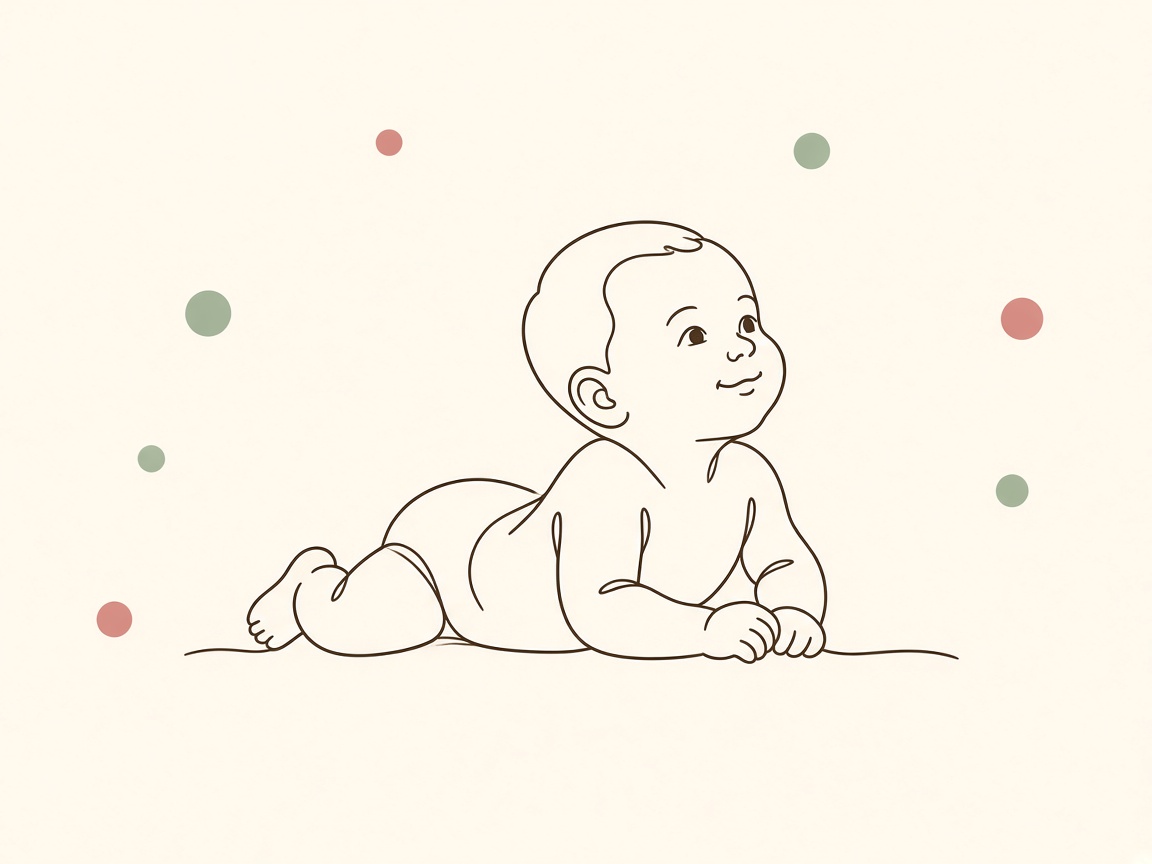
Tummy time of 30–60 minutes total across the day supports rolling later. Supervised floor time on the back, tummy, and side (awake only) builds the map they will use to roll. A play gym, a simple rattle, and your face remain the right toy budget. Sitting independently, crawling, and solids are not this month's work.
The 4-month well visit is next, not this week's panic. If you have worries about vision, hearing, tone, or social engagement, do not wait for the calendar. Three months is also when some parents return to work; expect a brief sleep and feeding wobble while everyone learns a new daytime pattern. It usually settles.
Every baby develops on their own timeline. Use this as a gentle guide. Talk to your pediatrician if you're concerned.
Many 3 month olds take about 5–6 oz (some 4–7 oz) per feed, 6–8 times in 24 hours. Daytime spacing of 3–4 hours is common. Breastfed babies may nurse 6–8 times, including a night feed or two. Milk — breast or formula — is still the only nutrition. Starting solids at 3 months is not recommended; wait for around 6 months and for readiness signs your pediatrician can confirm.
Supply for breastfeeding parents often feels more regulated: less leaking, more stable output. That can be misread as low supply. Check diapers and weight, not freezer-stash nostalgia. A 3-month growth spurt can still show up as a few hungrier days. Feed through it.
Night feeds may drop to one for some babies and stay at two or three for others. Growth, not Instagram, decides. If you are combo feeding, keep pumping or nursing at the intervals you want to protect. If bottles are routinely over 7–8 oz, talk with your pediatrician — very large bottles can mean feeding past fullness or a need to look at the overall pattern.
Download Tap Baby Care free on Google Play — one-tap logging for sleep, feeds and diapers, with AI nap windows when you need them most.
Common questions parents ask at the 3 months stage.
Playful vowel play is strong at 3 months, and early babbling with consonants often begins around 3–4 months. It starts as experimenting, not words. Answer it like a conversation — that back-and-forth is the point.
Naps of 30–90 minutes are all still in range, with 3–4 naps a day. One longer nap and a few shorter ones is a common mix. Night sleep may include a 6–8 hour stretch plus feeds.
Most families and clinicians wait until closer to 4 months, when sleep cycles have matured and night feeds can be reviewed against growth. At 3 months, focus on routines, wake windows, and a safe space. If you want a plan, talk with your pediatrician first.
Around 6 months for most babies, not at 3 months. Milk remains the sole nutrition. Readiness later includes sitting with support, good head control, and interest in food — your pediatrician will help you time it.
11 Weeks · 10 min read
Bedtime gets more predictable, some babies lean toward 4 naps, and forearm push-ups make tummy time look like a real sport.
Read the guide4 Months · 12 min read
Sleep cycles mature, first chuckles land, and the 4-month sleep regression can scramble nights that had just started to settle.
Read the guideNext: All about your 4 month old — Sleep cycles mature, first chuckles land, and the 4-month sleep regression can scramble nights that had just started to settle.
Read the next guide