Tap Baby Care
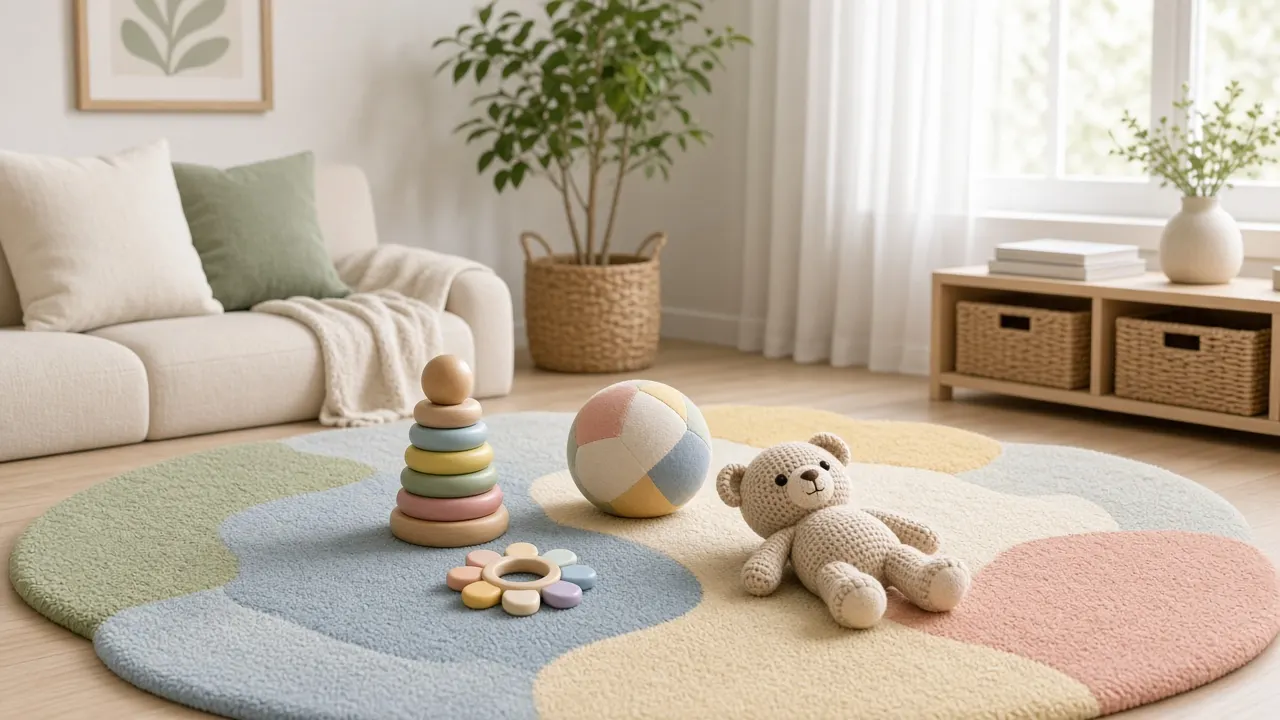
What newborns actually see
At birth, babies see best at about 8–12 inches (20–30 cm) — roughly the distance from your arms to your face during a feed. Beyond that, the world is blurry. They prefer high-contrast patterns (black and white, bold shapes) and faces.
Color vision is limited at first. Newborns see mostly in shades of gray, with some red and green perception. Full color vision develops over the first few months.
Month-by-month vision milestones
0–1 month: focuses on faces at close range; prefers high contrast; eyes may wander or cross occasionally.
1–2 months: begins to track moving objects; starts to recognize familiar faces.
2–3 months: color vision improves; begins to reach for objects; eyes coordinate better.
3–4 months: depth perception begins; can see across a room; recognizes toys.
5–8 months: color vision is nearly adult-like; can see small objects; depth perception improves.
9–12 months: vision is close to adult level; can recognize faces from across a room; points at objects. [NEEDS REVIEW]
How to support visual development
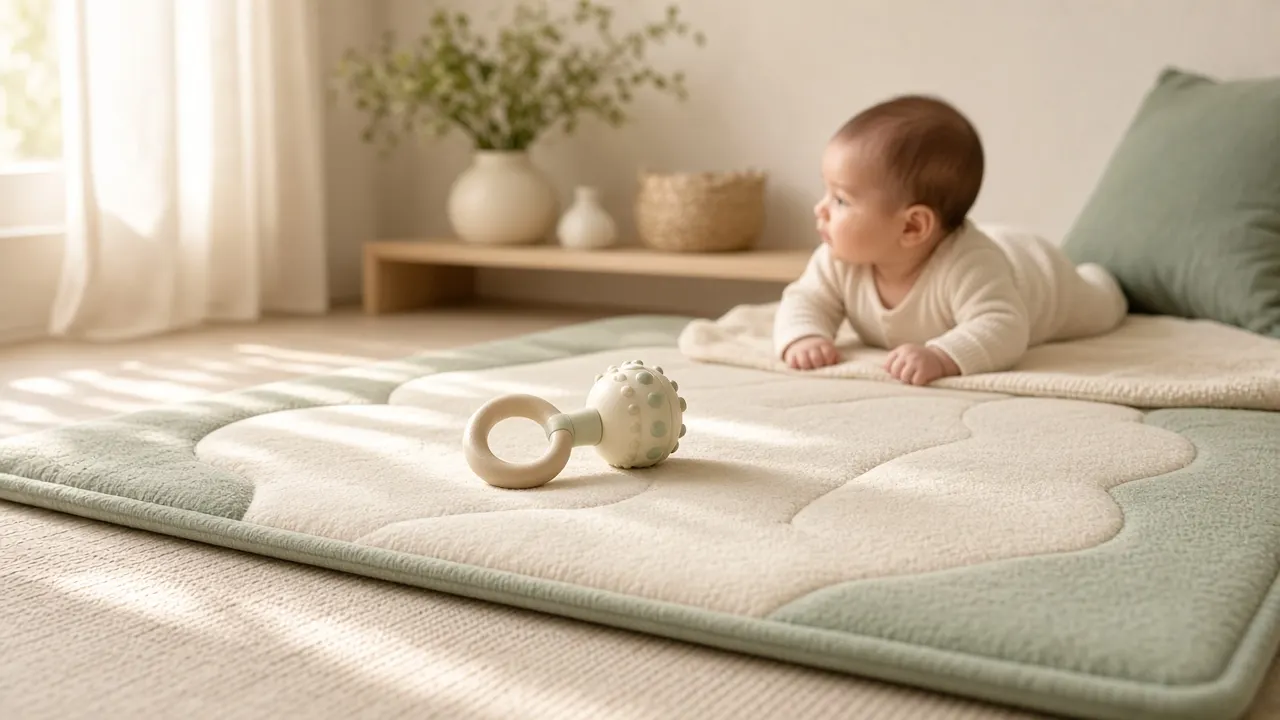
Hold baby 8–12 inches from your face and talk slowly — that is their visual sweet spot. Offer high-contrast toys and books (black and white, bold patterns) in the first months. Tummy time builds neck strength, which lets baby lift and look around.
Move toys slowly across baby's field of vision to encourage tracking. By 3–4 months, baby will start reaching for what they see.
Milestones logged, visits clearer.
Track growth and milestones in Tap Baby Care for your pediatrician.

When eyes crossing is normal
Occasional eye crossing in the first 2–3 months is common as the eye muscles learn to coordinate. If crossing is constant, or persists beyond 4 months, mention it at a well visit.
Babies do not need glasses in the first year unless a pediatric ophthalmologist identifies a specific issue. Routine vision screening happens at well visits.
When to call your pediatrician
Call if baby does not seem to track objects by 2–3 months, if eyes are constantly crossed after 4 months, if one eye turns in or out persistently, or if baby does not respond to visual stimuli. Early detection of vision issues leads to better outcomes.
Your pediatrician will check eye alignment and red reflex at well visits. If concerned, they may refer to a pediatric ophthalmologist.
How logging helps
Note when baby first tracks a toy, reaches for an object, or recognizes a face. These small milestones are easy to forget but useful at pediatric visits.
Tap Baby Care logs milestone notes alongside growth and daily care, so you have a complete picture for your next checkup.
Sources
- AAP HealthyChildren — Vision development (accessed 2026-11-12)
- CDC — Developmental milestones (accessed 2026-11-12)