 Tap Baby Care
10 Weeks · 10 min read
All about your 10 week old
Hand discovery takes over, naps look more like a 4–5 stretch day, and the peak-crying season often starts to ease.
Read the guideEleven weeks is the on-ramp to 3 months. Wake windows often sit in the 90–120 minute range, and a handful of babies start dropping from 5 naps toward 4 as those windows hold. Bedtime may look like an actual time on the clock instead of “whenever they collapse.” Enjoy the extra personality — and know that the 4-month sleep rearrangement is on the horizon, so this calmer stretch is worth savoring rather than assuming it is permanent.
Jump to a section
Totals often remain about 13–16 hours. Wake windows of 90–120 minutes, sometimes stretching toward 2 hours in the last window of the day, mean a 4-nap day is possible for some 11 week olds. Others still need 5. The tell is mood: if stretching to 4 naps creates a screaming evening, keep the fifth catnap. Nap number is a result, not a trophy.
Bedtime commonly lands in a 7–9 p.m. zone, earlier than newborn late-night sleep. A repeatable 20-minute wind-down (feed, song, sleep sack, bassinet) is worth more now because the brain can actually predict it. Nights may include a 6–8 hour first stretch plus a feed or two. That is excellent 11-week sleep. It is not a promise that next month will look identical.
Short naps persist because sleep cycles are still ~40–50 minutes and linking them is a skill that often waits until 4–6 months. You can pause 1–2 minutes at the end of a 30-minute nap to see if they roll into another cycle. If not, help them. Do not let a “crying it out” experiment start here because a nap was 32 minutes.
A clock-like bedtime is possible, with 4 or 5 naps depending on how long they can happily stay up.
These are guidelines. What's normal and healthy can vary.
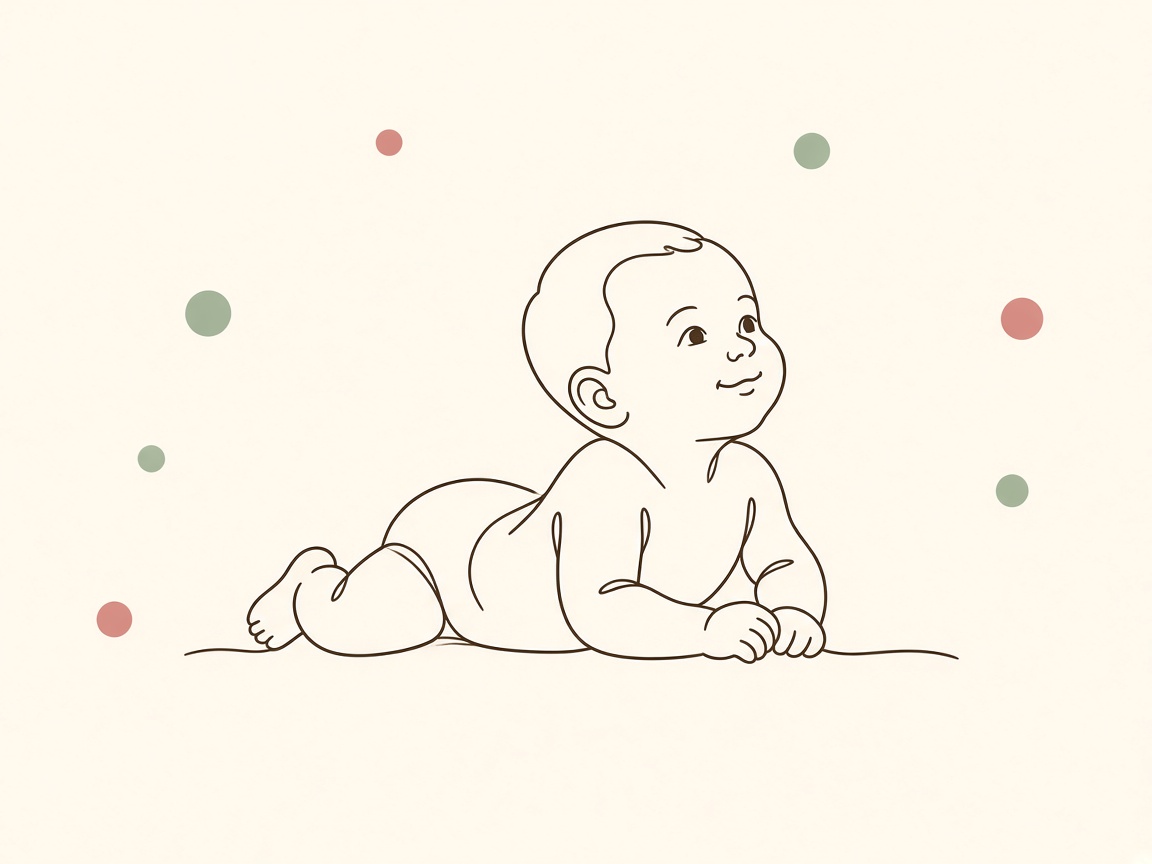
Forearm tummy time gets stronger. Some 11 week olds lift the chest and pivot a few degrees toward a toy. Reaching is more intentional, even if the grab still misses. Feet find each other. Head control in a supported sit is much steadier, though sitting independently is months away — do not prop in a hard sit for long stretches.
Language is a playground: longer coos, squeals, and the first consonant-ish ba/ga sounds for some. They may “answer” a sibling or a dog. Imitation is primitive but real — stick out your tongue over days and you might get a messy copy. That is connection, not a party trick.
This is a good week to scan for symmetry: both hands reaching, both legs kicking, head turning both directions. Bring asymmetry, very low tone, or missing social smile to the 3-month visit (or sooner). You know this baby well now. Your observations are data.
Every baby develops on their own timeline. Use this as a gentle guide. Talk to your pediatrician if you're concerned.
Feeds often look like 5–6 oz, 6–8 times a day, with 3–4 hours between many of them. Some babies are down to 5 daytime feeds plus one night feed. Breastfed babies may still nurse more often, especially if they use the breast to settle. Both patterns can support normal growth.
Appetite can dip slightly if they are more interested in the room, then rebound. Follow cues over the week, not one distracted Tuesday. If you are planning parental leave endings, practice bottles or a cup is still about milk only. Solids wait until around 6 months, with readiness signs that do not include “they watched us eat.”
Spit-up often lessens as they spend more time upright and the stomach grows. If it worsens, or if there is arching and poor weight gain, that is a visit. Night calories may still be 20–30% of intake for some babies; dropping them because of age alone can backfire on both sleep and supply.
Download Tap Baby Care free on Google Play — one-tap logging for sleep, feeds and diapers, with AI nap windows when you need them most.
Common questions parents ask at the 11 weeks stage.
Only if wake windows of about 90–120 minutes still produce a happy baby. Many 11 week olds still need 5. Drop a nap when the extra one is refused or when bedtime is getting pushed too late, not because of the number on a chart.
As circadian rhythm matures and late catnaps fade, night sleep often starts earlier. An 8 p.m. bedtime can be biologically on time at 11 weeks even if your newborn used to conk out at 11.
Yes. Sleep-cycle linking is still immature. Mixes of 30–45 minute naps and one longer stretch are typical. Rescue the nap that protects bedtime rather than trying to fix every catnap.
A sleep-cycle maturation often shows up around 3.5–4.5 months. At 11 weeks you may still be in a relatively smooth pocket. Use it to cement a simple bedtime routine and a safe sleep space — not to start aggressive sleep training.
10 Weeks · 10 min read
Hand discovery takes over, naps look more like a 4–5 stretch day, and the peak-crying season often starts to ease.
Read the guide3 Months · 12 min read
Rhythms get more predictable, hands become tools, and babbling starts — just as sleep cycles prepare for a big upgrade.
Read the guideNext: All about your 3 month old — Rhythms get more predictable, hands become tools, and babbling starts — just as sleep cycles prepare for a big upgrade.
Read the next guide