Tap Baby Care
8 Weeks · 9 min read
All about your 8 week old
Eight weeks often brings the first real social smile and longer wake windows — and sometimes the peak of evening crying.
Read the guideTwelve weeks is a small graduation. Your baby is more alert, more social, and more physically capable than a month ago. Wake windows stretch, naps may start to organize, and the first rolls can appear. This guide covers sleep, feeding, and development at 12 weeks, plus what to watch for at the 3-month checkup.
Jump to a section
At 12 weeks, many babies sleep about 14–15 hours in 24 hours, with wake windows stretching toward 75–120 minutes. Naps may start to organize into 3–4 a day, though catnaps still happen. Nights can include a 5–8 hour stretch for some babies, but not all. Day/night confusion is usually gone.
You may start to see a more predictable day shape: wake, feed, play, sleep, repeat. The goal is enough total sleep and a rhythm you can recognize, not a rigid clock. If your baby is falling asleep while eating every time, they may be going into the feed already tired — try starting the nap a few minutes earlier.
A consistent bedtime routine earns its keep now: dim lights, feed, sleep sack, down on the back. You are not sleep training. You are giving the circadian system a daily postcard. Stop swaddling as soon as they show signs of rolling.
A more predictable day shape: wake, feed, play, sleep, repeat.
These are guidelines. What's normal and healthy can vary.
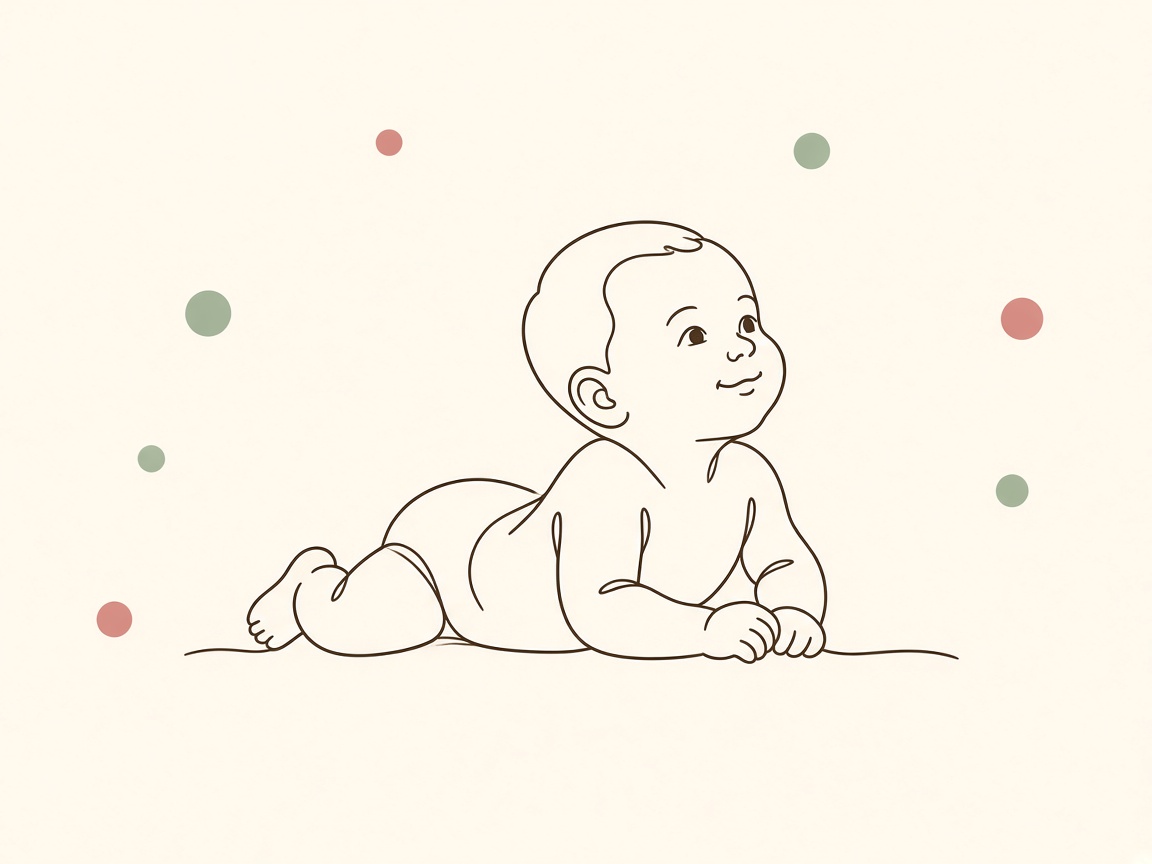
Twelve weeks often brings the first rolls (tummy to back), reaching for toys, and bringing hands to the mouth on purpose. Your baby tracks a face or toy across a full arc, coos and babbles, and may laugh. They recognize familiar people and may show a preference for you. Tummy time can build toward 20–30 minutes total across the day.
The 3-month visit typically includes vaccines, weight, length, head circumference, and a developmental check. Ask about feeding, sleep, and any concerns. Bring a log if you have one.
Overstimulation arrives faster than you expect. Hiccups, looking away, or a color-changing cry are all “please stop the circus” signals. Less is still more.
Every baby develops on their own timeline. Use this as a gentle guide. Talk to your pediatrician if you're concerned.
Many 12 week olds take about 5–6 oz per feed, 5–7 times in 24 hours, often every 3–4 hours. Breastfed babies may go longer between some daytime feeds and still cluster at night. Efficiency usually improves. Wet diapers should remain frequent.
Growth is the judge. Most babies are well above birth weight and following a curve. Spit-up can still be generous. Painful, arching, inconsolable feeds are a different story and worth a clinical conversation.
You still do not need solid food, water, or juice. If you are pumping, notice a more stable daily output. If you are combo feeding, keep at least some direct breastfeeding or pumping if your goal is to maintain supply — volume follows demand.
Download Tap Baby Care free on Google Play — one-tap logging for sleep, feeds and diapers, with AI nap windows when you need them most.

Common questions parents ask at the 12 weeks stage.
Many babies roll tummy to back around 3–4 months. Some start earlier, some later. Always supervise on raised surfaces and practice tummy time.
Most 12 week olds sleep about 14–15 hours across 24 hours, with wake windows of 75–120 minutes.
Stop swaddling as soon as your baby shows signs of rolling. Move to a sleep sack with arms free.
8 Weeks · 9 min read
Eight weeks often brings the first real social smile and longer wake windows — and sometimes the peak of evening crying.
Read the guide4 Weeks · 9 min read
Four weeks in, alert minutes stretch a little and feeds may feel less frantic — a quiet turn of the page toward a recognizable rhythm.
Read the guide2 Months · 11 min read
Social smiles are the main event, wake windows stretch past an hour, and the 2-month visit brings vaccines and a progress check.
Read the guide3 Months · 12 min read
Rhythms get more predictable, hands become tools, and babbling starts — just as sleep cycles prepare for a big upgrade.
Read the guide4 Months · 12 min read
Sleep cycles mature, first chuckles land, and the 4-month sleep regression can scramble nights that had just started to settle.
Read the guideNext: All about your 4 month old — Sleep cycles mature, first chuckles land, and the 4-month sleep regression can scramble nights that had just started to settle.
Read the next guideTools, topics, and age guides to support your baby's growth.